Automation & Robotics
Siggins works as a warehouse automation integrator, adding automation where it creates measurable operational value rather than where it simply adds complexity.
Automation isn’t the goal. Performance is.
As a warehouse automation integrator, Siggins starts with the operation, not a specific technology. We design and integrate automation for warehousing and distribution operations when it delivers measurable operational value and we’re equally direct when a simpler solution makes more sense.
Start With What the Operation Needs
Automation is one option, not the starting point.
Layout changes, slotting, process improvements and mechanized equipment can sometimes deliver significant gains without the cost and complexity of advanced automation or robotics.
In one Siggins project, non-robotic improvements reduced labor requirements by 50% and improved space utilization by 30%.
That’s why we analyze the operation first and determine what level of technology the problem actually requires. Automating an inefficient process can carry the same constraints into a system that’s more complex and more expensive to change.
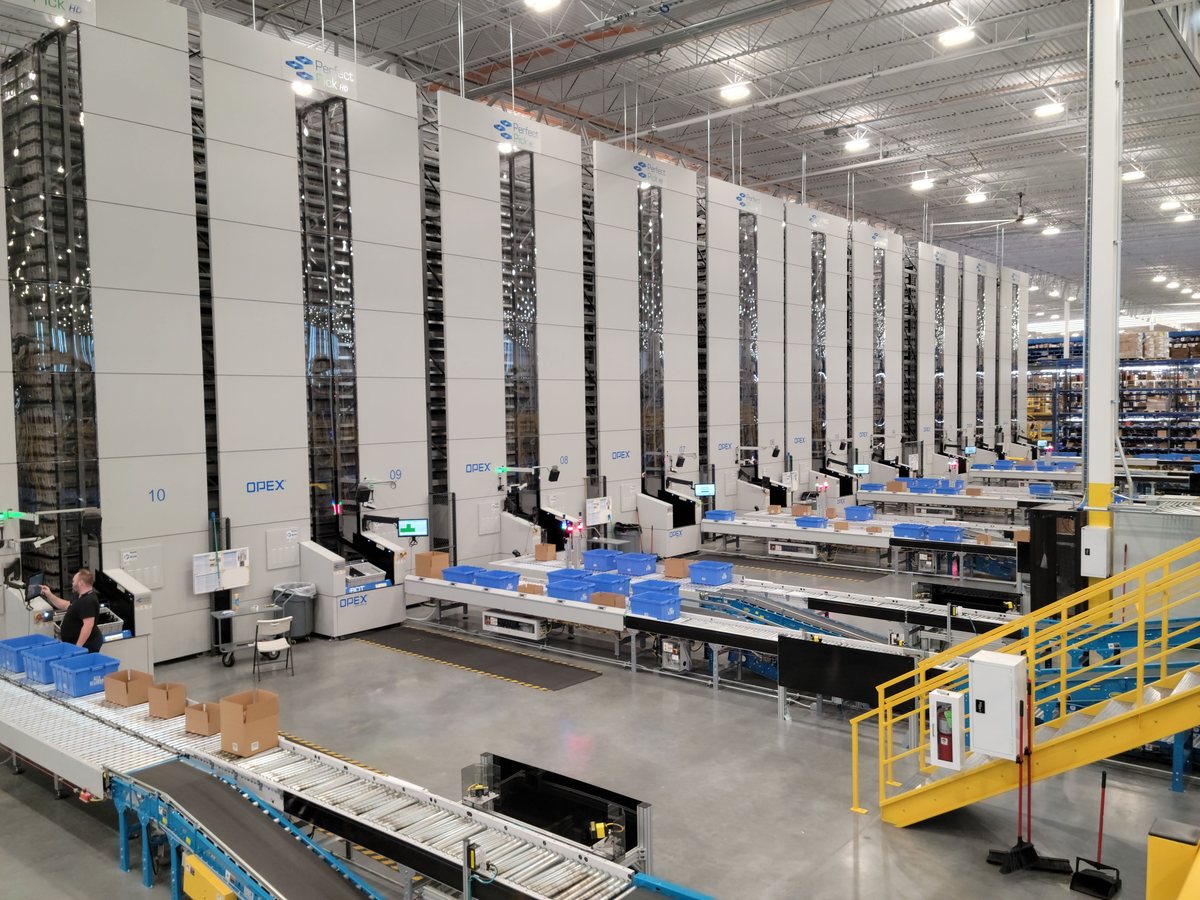
Understanding Where Your Operation Sits Today
Most operations fall somewhere along a progression:
Manual People, carts and lift equipment perform most of the work.
Mechanized Conveyor, lift trucks, flow rack and other equipment reduce travel and manual movement.
Automated Automation, robotics and software perform or coordinate a significant share of the work, with people supporting the system where they add the most value.
Understanding where your operation sits today helps determine what should come next.
Many customers come to us with primarily manual or mechanized operations. In those environments, reducing travel, unnecessary touches and process constraints can create meaningful gains before more advanced automation is introduced.
What We Design and Integrate
- Goods-to-person systems
- Autonomous mobile robots (AMRs)
- Autonomous lift trucks and automated guided vehicles (AGVs)
- Automated storage and retrieval systems (AS/RS)
- Pick-to-light and RF-directed picking
- Automated packaging, print-and-apply and labeling systems
- Conveyor, sortation and material flow equipment
- Controls and software integration that coordinate equipment across the system
Because we’re not tied to a single automation technology or OEM, the solution is driven by the application and the performance the operation needs to achieve.
Build the Right Level of Automation
The best automation strategy isn’t necessarily the one with the most technology. It’s the one that delivers the required performance while balancing throughput, labor, capital investment, flexibility and operational risk.
That may mean automating a single high-labor process. It may mean combining mechanized systems with robotics. Or it may require a highly automated, integrated fulfillment system.
Our engineers evaluate those alternatives before determining where automation creates the greatest operational and financial value.
Phased Implementation
New equipment, controls and software have to work together without unnecessarily disrupting the operation they’re meant to improve.
Our phased implementation approach brings systems online in planned stages, helping maintain operational stability throughout the transition.
Phasing also allows performance to be measured against what each stage was designed to deliver before moving to the next. Each phase is engineered with the next in mind, creating a path for the system to grow without unnecessary rework.
What improves:
- Throughput and capacity
- Picking efficiency
- Labor utilization
- Operational consistency
- Space utilization
- Scalability and flexibility
Start with a SOLVE Analysis
Understand what your operation needs before committing to equipment or automation decisions.

Warehousing and Distribution Solutions