Controls & Software Integration
Connect controls, equipment and operational data into a more visible and coordinated system.
Controls are what turn equipment into a system.
Equipment doesn’t create an integrated system on its own. Controls and software are what make the pieces work together.
Through warehouse controls integration and PLC controls engineering, Siggins coordinates conveyor, sortation, robotics, storage systems, scanners and other automation while connecting the equipment layer with the WMS and ERP systems your operation already uses.
The objective is one coordinated system from the equipment on the floor to the information used to manage the operation.
From WMS to the Equipment Layer
An integrated material handling system may involve multiple layers of software and controls, each with a different responsibility.
The warehouse management system (WMS) typically manages inventory, orders, locations and fulfillment requirements. Depending on the system architecture, a warehouse execution system (WES) or warehouse control system (WCS) may coordinate work across automation, balance flow and translate higher-level requirements into equipment-level tasks. PLC and machine controls execute those commands at the equipment level while managing sensors, motors, safety circuits and device logic.
The exact architecture depends on the operation and the technologies being integrated.
Siggins engineers the interfaces between these layers so orders, inventory, routing decisions, equipment status and exceptions move through the system with the speed and reliability the operation requires.
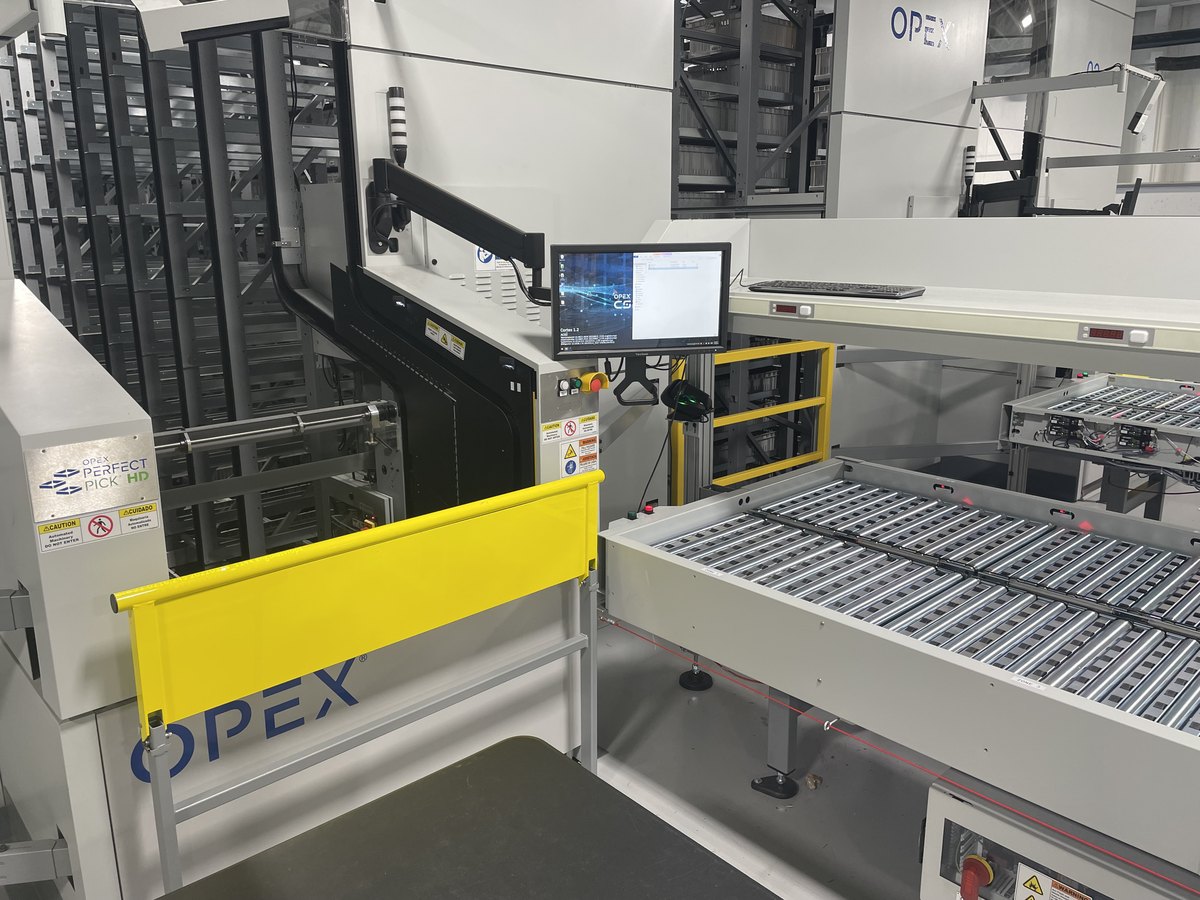
What We Engineer and Integrate
- WMS, WES and WCS interfaces
- PLC and machine-level controls
- Conveyor and sortation control
- AMR, AS/RS and robotics interfaces
- Barcode scanning and license-plate tracking
- Routing, divert and destination logic
- Equipment status and fault communication
- Exception handling and recovery logic
- Operational data collection and reporting
The objective isn’t to add another software layer where one isn’t needed. It’s to define the simplest controls and software architecture capable of coordinating the operation at the required rate.
Controls Are Part of the System Design
Conveyor, robotics, storage and other automation may come from different manufacturers, but the operation experiences them as one system.
That’s why controls engineering begins during system design, not at startup.
We define how equipment communicates, how products are identified and routed, how exceptions are handled and how information moves between the equipment and software layers before the system is commissioned.
Designing the controls architecture alongside the physical system helps reduce integration risk and creates a clearer path from engineering through startup.
Modernize the Controls Without Replacing the Equipment
Older equipment doesn’t necessarily need to be replaced simply because its controls are outdated.
Legacy controls modernization can extend the useful life of mechanically sound systems by replacing obsolete hardware, updating or rewriting PLC programs and improving communication with newer equipment and software.
For upgrades and retrofits, we use staged integration and structured testing to bring new and existing systems together while minimizing disruption to the operation.
That allows companies to preserve useful infrastructure while creating a controls platform that can support future modernization.
Turn Operational Data Into Visibility
Every scan, route decision, fault and equipment status creates information about how the system is performing.
We can use that data to provide operational dashboards, performance reporting and diagnostic visibility that help teams understand what’s happening across the system.
Instead of relying only on the point where a problem becomes visible, operators and managers can better identify where flow is slowing, where exceptions are occurring and where equipment performance is affecting throughput.
One System. Multiple Technologies.
Modern distribution systems increasingly combine technologies from multiple manufacturers.
The challenge isn’t simply making each piece of equipment run. It’s coordinating those technologies so products move to the right destination, at the required rate, with the information the operation needs to manage them.
Siggins engineers the controls, interfaces and integration architecture that bring those technologies together.
What improves:
- System coordination
- Equipment interoperability
- Real-time operational visibility
- Routing and tracking accuracy
- Performance monitoring
- Troubleshooting and diagnostics
- Operational reliability
- Ability to modernize and scale
Start with a SOLVE Analysis
Understand what your operation needs before committing to equipment or automation decisions.

Warehousing and Distribution Solutions