Fulfillment & Packaging Systems
Fulfillment workflows that support accuracy, speed and long-term operational efficiency.
Fulfillment starts with the order profile.
Siggins designs and integrates fulfillment and packaging systems around how orders actually move through warehousing and distribution operations from picking and consolidation through packing and shipping.
The goal isn’t simply to process more orders. It’s to create a system that delivers the throughput, accuracy and cost per order the operation requires across its actual order mix, including peak demand.
The Order Profile Drives the System
An operation shipping full cases to retail distribution centers has very different requirements than one shipping single-item orders directly to consumers, even at similar order volumes.
Picking methods, inventory positioning, material flow, consolidation, packaging and automation decisions all follow from those differences.
That’s why we start with real operational and order data. We analyze factors such as:
- Orders and lines per day
- Lines and units per order
- SKU and product mix
- Item and order velocity
- Full-case versus each picking
- Carton and shipping characteristics
- Peak and seasonal demand
That analysis helps determine how inventory and orders should move through picking, consolidation, packing and shipping before technology is selected.
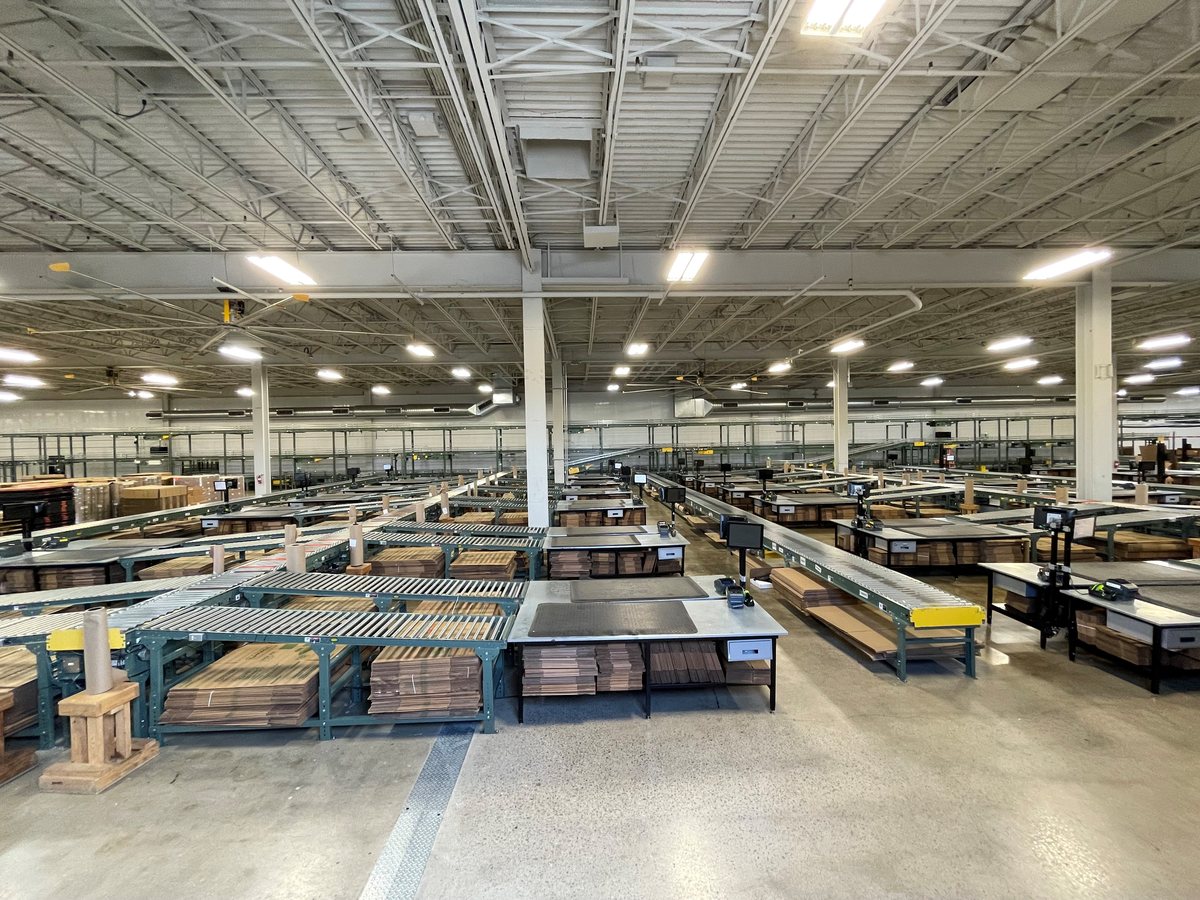
What We Design and Integrate
- Pick-to-light and RF-directed picking
- Batch, zone and discrete picking
- Pick-to-carton and pick-to-tote workflows
- Pick-to-cart and other manual picking strategies
- Ergonomic packing stations
- Right-sized and on-demand packaging
- Automatic carton erectors and sealers
- Carton cut-down systems
- Print-and-apply and label applicators
- Sortation and order consolidation
- Scales and dimensioners
- Cartonization
- Shipping and manifesting interfaces
- Returns processing
Reduce Touches From Pick Through Ship
Every unnecessary touch adds time, labor and another opportunity for error.
The fulfillment system should minimize how often an order is handled while maintaining the flexibility required by the operation.
Depending on the order profile, that may mean picking directly into a shipping carton, batching multiple orders through a common picking process, using zones to reduce travel, or introducing automation where volume and repetition justify it.
The objective is to engineer the simplest flow capable of delivering the required performance.
Packaging Affects More Than the Box
Packaging influences labor, material consumption, shipping cost and the amount of space required throughout the fulfillment process.
Oversized cartons can increase dimensional weight and consume unnecessary packaging material. Manual carton selection, erection, void fill, sealing and labeling can also add significant labor to every order shipped.
Right-sized and on-demand packaging can reduce manual handling while creating packages better matched to the products being shipped.
The right packaging strategy depends on the product, order profile, carrier requirements and shipping economics, which is why we evaluate packaging as part of the larger fulfillment system rather than as a standalone process.
Design for the Volume That Matters
Average volume doesn’t design a fulfillment system. Peak demand does.
Many operations experience periods when order volume rises significantly at the same time additional labor becomes harder to find. The fulfillment system still has to perform.
We model average, design and peak volumes before equipment is selected so picking, material flow, order consolidation, packing and shipping can support the demand the operation actually needs to handle.
That analysis also helps determine where automation creates measurable value and where a simpler process can deliver the required performance with less cost and complexity.
Build Flexibility Into the Fulfillment Process
Order profiles change.
SKU counts grow. Customer expectations change. Direct-to-consumer volume may increase. Retail and wholesale channels can shift. Peak demand can become more pronounced.
A fulfillment system designed too tightly around today’s average order can become tomorrow’s constraint.
We design systems with the capacity and flexibility to accommodate changes in volume, order mix and fulfillment channels without unnecessarily overbuilding the operation on day one.
What improves:
- Order throughput
- Order and shipping accuracy
- Picking and packing efficiency
- Labor utilization
- Cost per order shipped
- Packaging and freight efficiency
- Peak capacity
- Returns processing
Start with a SOLVE Analysis
Understand what your operation needs before committing to equipment or automation decisions.

Warehousing and Distribution Solutions